Over the years, I've had the opportunity to work on many Building Management System (BMS) projects across different industries. One thing has remained consistent throughout my journey: buildings are generating more data than ever before.
The challenge isn't collecting the data anymore. Most modern buildings already have thousands of data points available through their BMS. The real challenge is turning that data into meaningful actions that improve efficiency, reduce costs, and make life easier for facility teams.
This is where I believe Artificial Intelligence (AI) is starting to make a real impact.
We Have More Data Than We Know What to Do With
Walk into any modern facility today and you'll find systems continuously collecting information from chillers, air handling units, pumps, VAVs, energy meters, sensors, and countless other devices.
Traditionally, facility teams would review alarms, monitor trends, and investigate issues manually. While this approach works, it often means problems are identified only after they have already affected operations.
AI changes that by helping us find patterns and insights hidden within the data—things that would be difficult or time-consuming for a human to spot.
Instead of simply telling us what happened, AI can help us understand what is happening, why it is happening, and what might happen next.
Moving From Reactive to Predictive Maintenance
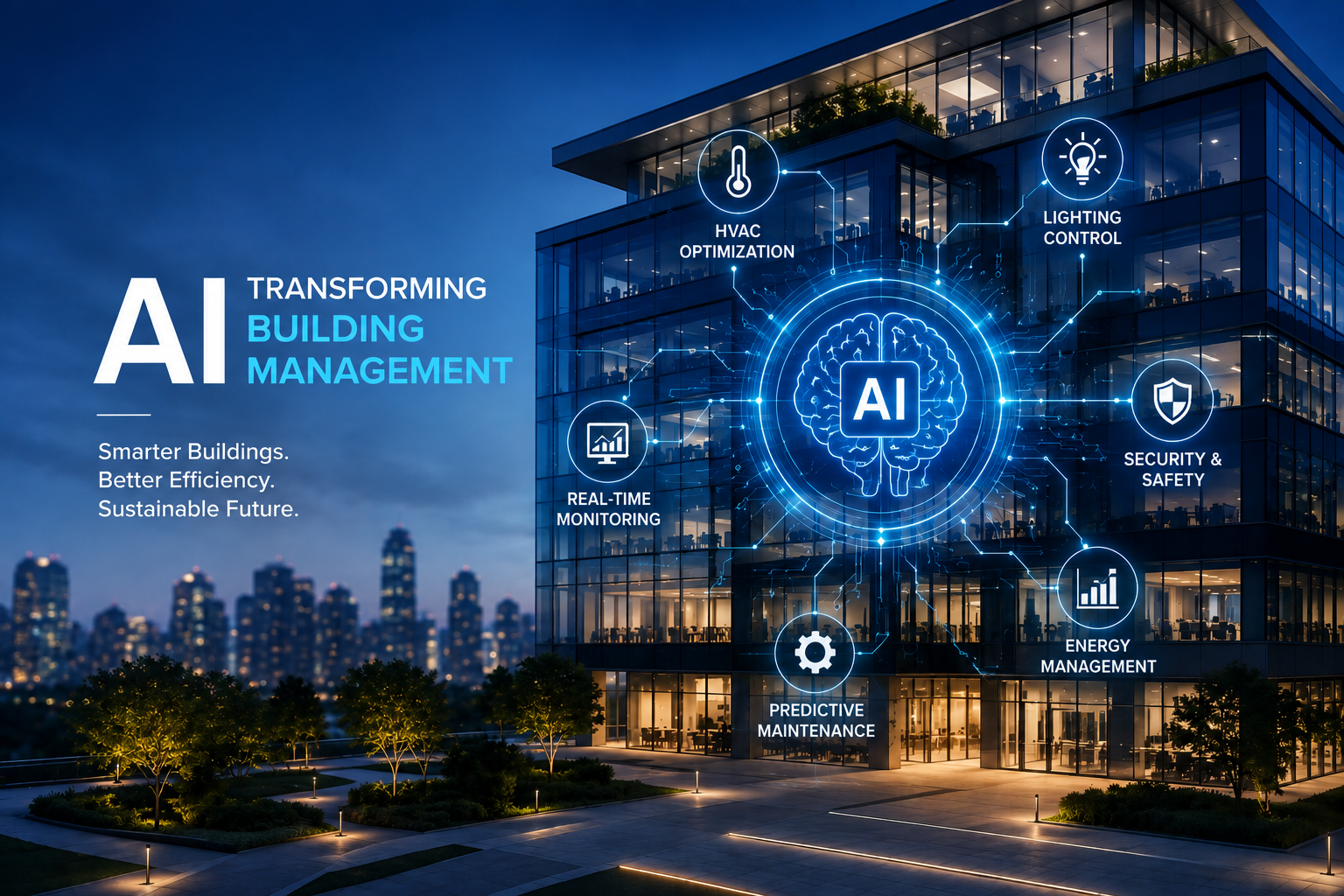
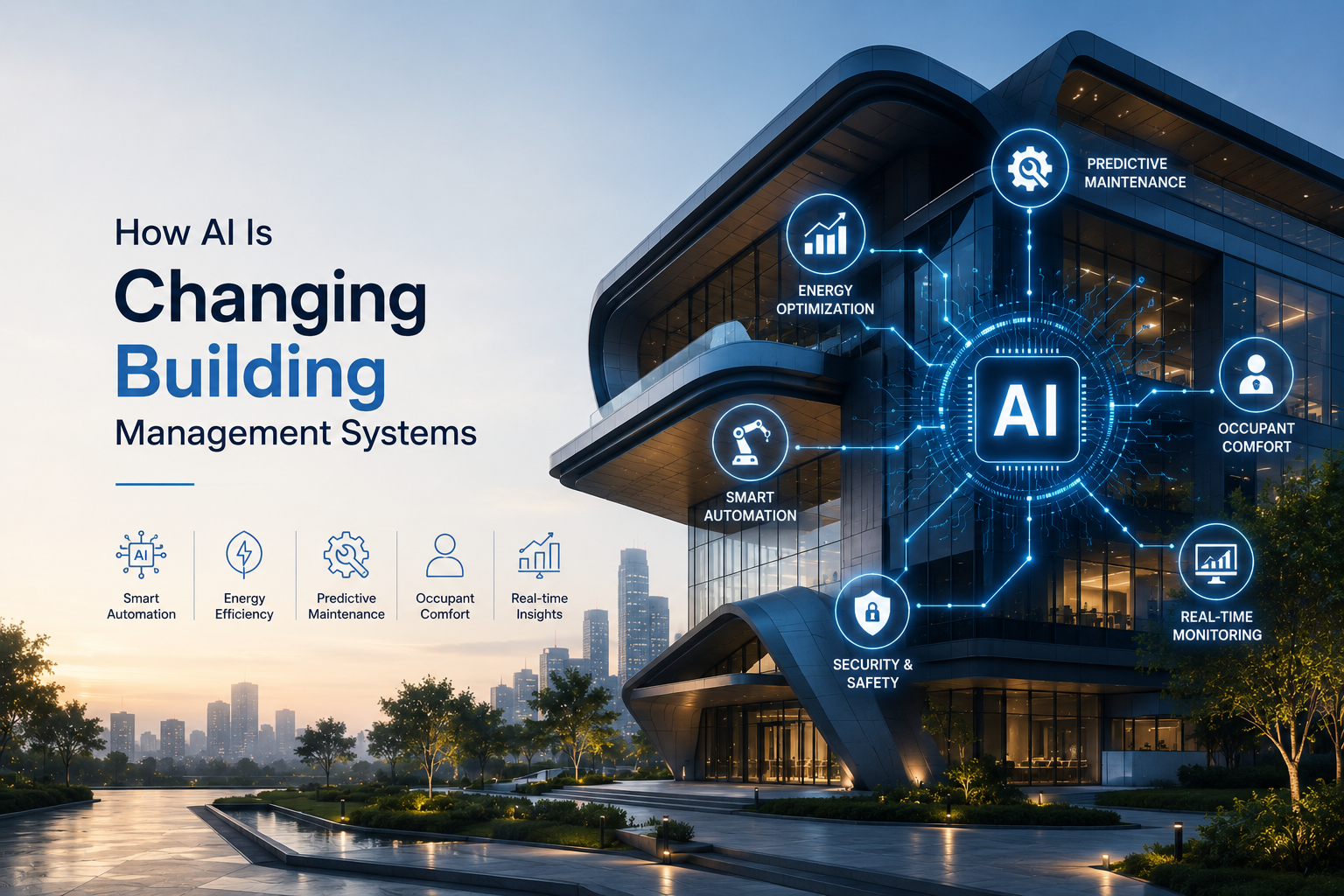
One of the most exciting applications of AI is predictive maintenance.
We've all experienced situations where equipment suddenly fails, leading to emergency repairs, downtime, and frustrated occupants. Even with preventive maintenance schedules in place, unexpected failures can still occur.
AI can continuously analyze equipment performance and detect subtle changes that may indicate an upcoming issue.
For example, a chiller's energy consumption may gradually increase over several weeks, or an AHU may begin operating outside its normal performance range. These changes might not immediately trigger alarms, but AI can identify them early and alert the operations team before a failure occurs.
For facility managers, that means fewer surprises, lower maintenance costs, and better reliability.
Energy Efficiency Is Becoming Smarter
Energy management has always been a key objective for building owners, but AI is taking it to another level.
Rather than relying solely on fixed schedules and static control strategies, AI can consider factors such as occupancy patterns, weather conditions, equipment performance, and historical energy trends.
The result is a building that continuously learns and adapts.
As a Schneider Electric EcoXpert, I've seen how platforms such as EcoStruxure Building Operation are already providing a strong digital foundation for smart buildings. By combining rich operational data from EcoStruxure platform with advanced analytics and AI capabilities, building owners can gain deeper insights into energy performance and uncover opportunities for continuous optimization.
The future is not just about automation it is about intelligent automation.
Solving the Alarm Fatigue Problem
If you've worked in facilities management, you'll know that one of the biggest challenges is alarm overload.
A single issue can generate multiple alarms across different systems, making it difficult to identify the root cause quickly.
AI has the potential to dramatically improve this process by correlating alarms, identifying abnormal patterns, and highlighting the most critical events that require attention.
Instead of reacting to hundreds of alarms, operators can focus on resolving the issues that truly matter.
That translates into faster response times and more efficient operations.
The Rise of Autonomous Buildings
I often compare the future of buildings to the evolution of modern cars.
Years ago, vehicles relied entirely on driver input. Today, many cars can assist with parking, lane keeping, collision avoidance, and route optimization.
Buildings are heading in the same direction.
By combining Building Management Systems, IoT devices, cloud analytics, and AI, we're moving toward buildings that can continuously monitor their own performance, identify inefficiencies, recommend corrective actions, and eventually implement optimizations automatically.
Human expertise will always be essential, but AI will become a powerful assistant that helps facility teams make better decisions faster.
Why This Matters
For me, AI is not about replacing facility managers or engineers.
It's about giving them better tools.
The best facilities teams already possess tremendous knowledge and experience. AI helps amplify that expertise by processing vast amounts of data and surfacing insights that might otherwise go unnoticed.
As buildings become more connected and sustainability targets become more ambitious, the ability to make faster, smarter decisions will become increasingly important.
How Wizard Engineering Can Support Your Digital Transformation Journey
At Wizard Engineering, we believe the transition towards intelligent buildings is not just about installing technology. It is about understanding operational challenges and creating solutions that deliver measurable value.
As a Schneider Electric EcoXpert, we help organizations on their smart building transformation journey by combining:
Building Management Systems (BMS) Providing reliable monitoring, control, and automation of building operations.
Energy Management Solutions Helping organizations understand energy performance and identify optimization opportunities.
System Integration Connecting multiple building systems to create a unified operational platform.
Digital Analytics & Dashboards Transforming building data into meaningful insights for better decision-making.
AI-Ready Building Infrastructure Preparing facilities to leverage advanced analytics, predictive maintenance, and future AI applications.
Our role is to help organizations maximize the value of their existing building infrastructure while creating a pathway towards smarter, more sustainable operations
Looking Ahead
We're still in the early stages of AI adoption within the building automation industry, but the direction is clear.
Organizations that embrace AI, advanced analytics, and digital platforms such as EcoStruxure Building Operation today will be better positioned to reduce operating costs, improve reliability, enhance occupant comfort, and achieve their sustainability goals tomorrow.
Having worked in the building automation industry for many years, I genuinely believe this is one of the most exciting periods of transformation we have seen. The combination of BMS, energy management, and AI is opening opportunities that simply weren't possible a decade ago.
And this is only the beginning